
Safety comes first, every time
No one touches the body until the high voltage is isolated. That's the rule, with no exceptions.
Electric and hybrid
Your EV or hybrid carries a big battery and orange high-voltage cables. That changes how a body shop has to work. We'll show you what changes, and why.
(000) 000-0000 — ask how we handle your EV or hybrid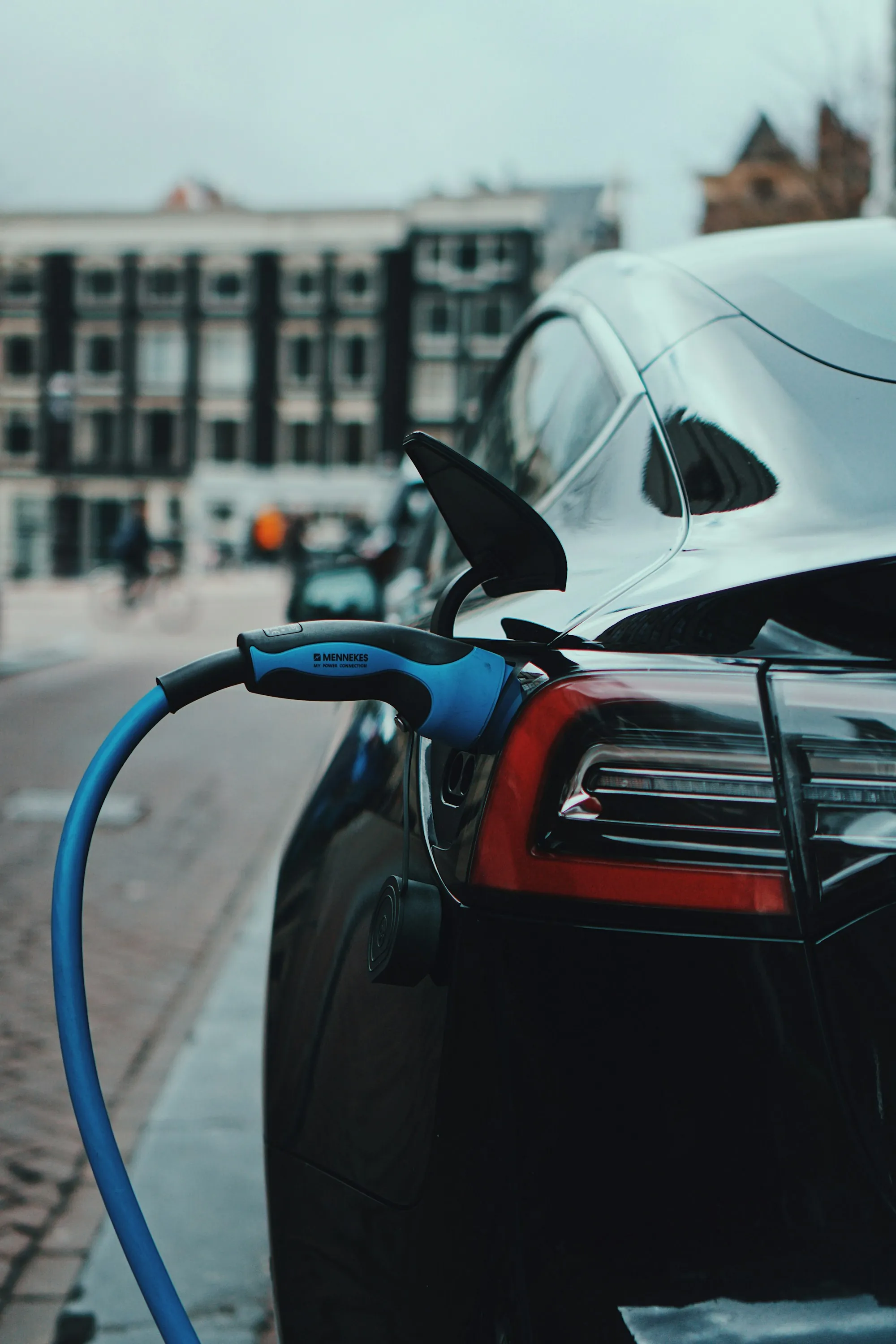
An EV or hybrid looks like any other car from the outside. Underneath, it's different. There's a high-voltage battery, thick orange cables and a lot of electronics. A crash can stress all of it. So the first job isn't the dent. It's making the car safe to work on. After that, we inspect the battery area, follow the maker's repair steps and write every task on your estimate. You'll know why each one is there.
Each of these shows up on your estimate. Ask about any of them.
We follow the maker's steps to disconnect and isolate high voltage before work begins. That keeps our techs and your car safe.
We inspect the battery housing and its mounts for impact marks. Underbody hits matter a lot here.
High-voltage wiring and connectors are checked for damage anywhere near the crash zone. Anything pinched or cut gets replaced, never patched.
Battery packs don't like high heat. We adjust how the fresh paint cures so the pack stays safe. It takes a little longer, and that's fine.
EVs need specific lift points to keep weight off the pack. We use them every single time.
Many batteries are liquid cooled. We look for leaks or crushed lines after a front or underbody impact.
We scan the car's computers before and after. EVs have lots of them, and they all need to talk. Every report goes in your file.
High voltage is reconnected following the maker's steps, and the car is driven to confirm everything behaves.
The car arrives, often by flatbed from somewhere off Interstate 30. We isolate the high-voltage system first. Then we check the battery area for damage. You hear right away if anything there needs the maker's input.
We pull up the factory repair procedure for your model. It tells us which parts can be repaired and which must be replaced. Your estimate is built from those steps. Each line gets a short explanation. Ask about any line you like.
Body and paint work happen with the pack in mind. Then high voltage is reconnected carefully. We scan, test-drive and look over every system. Only then do we ring you for pickup. You get the scan printouts too.
No one touches the body until the high voltage is isolated. That's the rule, with no exceptions.
We work from your car's own repair procedure. If it says replace, we replace, and we show you the page. That page is yours to read.
EV repairs carry extra tasks. You'll see each one listed and explained before we start.
Don't drive it if a battery warning is showing. Ring us and we'll talk through the safest way to get it here.
Talk EV repair with us — (000) 000-0000